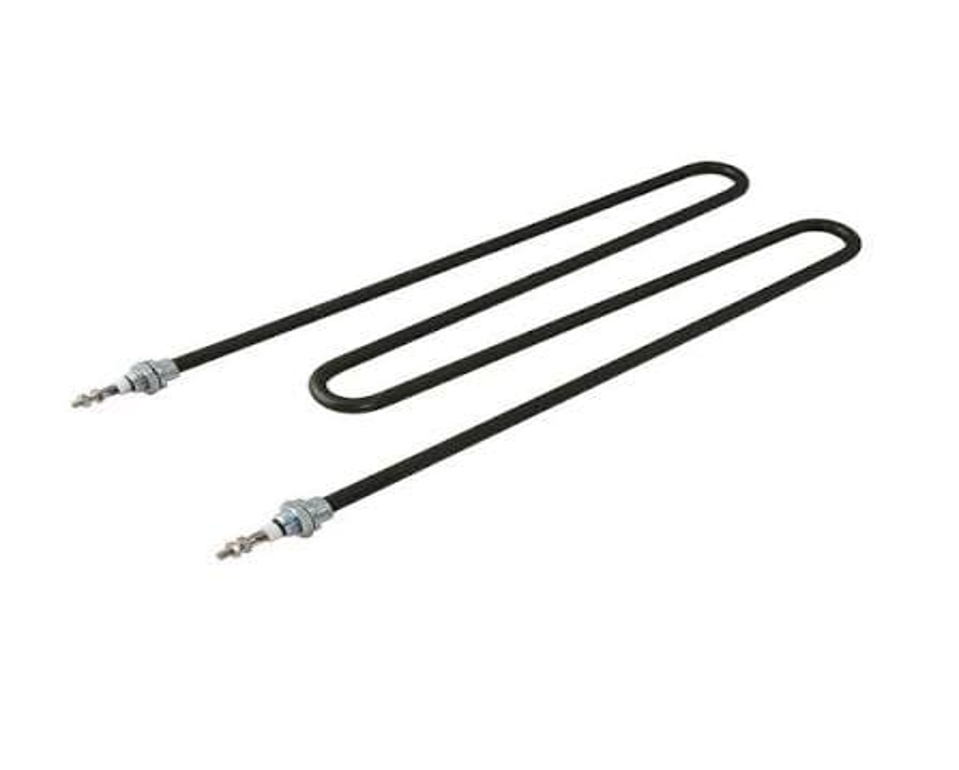
Incoloy heating elements are electric heating components encased in an outer sheath made from Incoloy a high-performance superalloy composed primarily of nickel, iron, and chromium
How It Is Constructed
Like standard tubular heaters, an Incoloy element consists of:
Core: A coiled resistance wire (typically Nichrome) that generates heat when electricity passes through it.
Insulation: Compacted magnesium oxide (MgO) powder surrounding the wire to conduct heat outward while preventing electrical shorts.
Outer Sheath: The protective Incoloy tube that directly contacts the air, liquid, or surface being heated.
Clamping System: Integrated straps, flanges, or screw clamps pull the heater tightly against the cylindrical barrel to minimize air gaps and maximize conductive heat transfer.
Why Incoloy Is Used
Standard stainless steel sheaths (such as 304 or 316) can degrade or crack under extreme conditions. Incoloy (commonly Incoloy 800 or 840) offers significant performance advantages:
High Temperature Tolerance: Operates continuously at temperatures up to 870°C without losing mechanical strength.
Corrosion & Scale Resistance: Resists pitting, oxidation, and mineral buildup (limescale) in harsh water conditions.
Stress-Corrosion Protection: Highly resistant to chloride stress-corrosion cracking, making it suitable for chlorinated water or marine environments.
Common Applications
Domestic & Commercial Water Heaters: Used in hard water areas to prevent premature element burnout from limescale.
Foodservice Equipment: Commercial fryers, ovens, griddles, and dishwashers.
Industrial Processing: Chemical immersion tanks, heat treating furnaces, and process air heating.